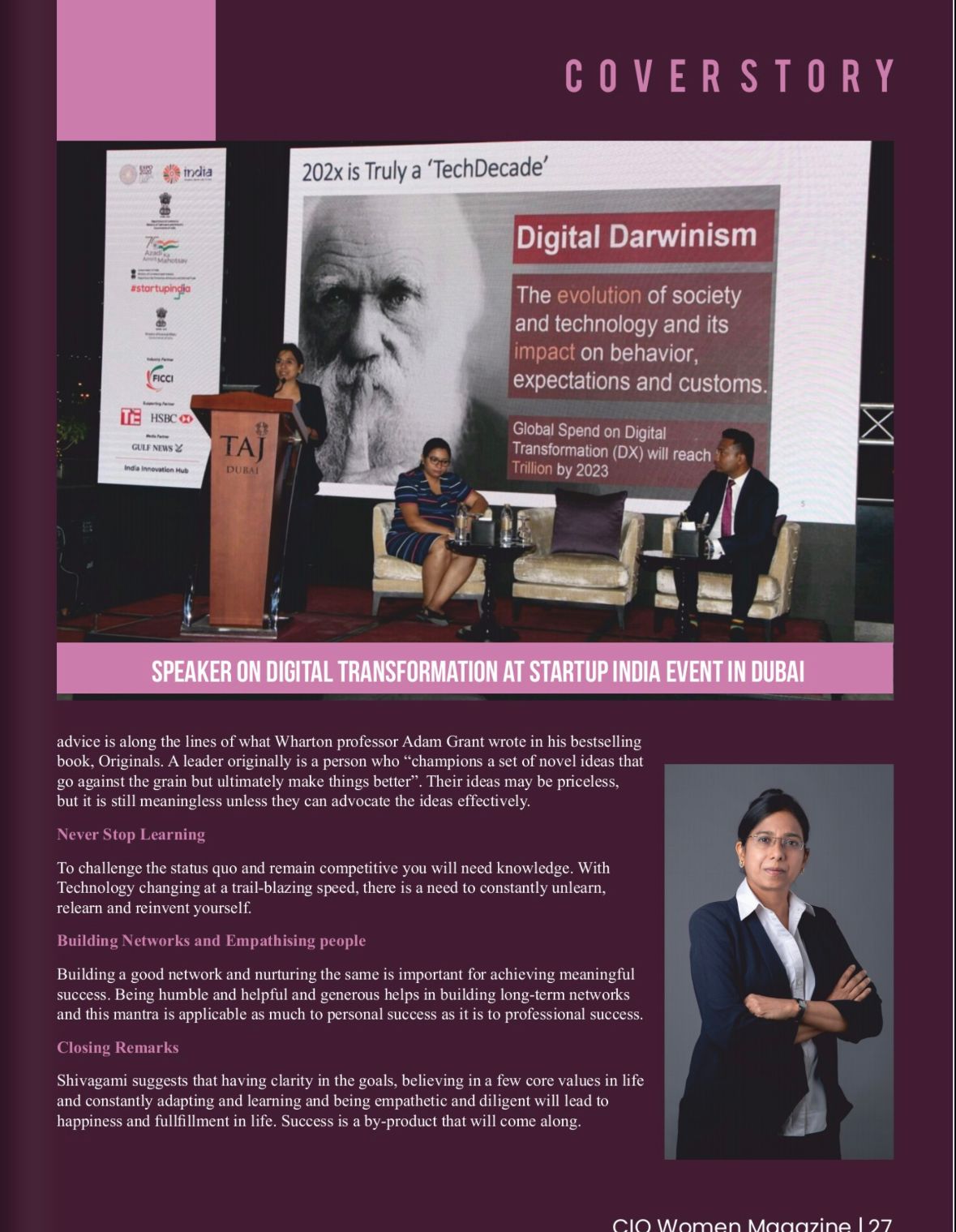
Recently I watched a TV show where there were heated discussions amongst the panel members on the topic of digitisation and digitilisation. The first few minutes were spent by the experts explaining what they thought should be the right choice of word. For me, this debate made no sense at all.
“What's in a name? That which we call a rose by any other name would smell as sweet” as Shakespeare says.
I’ve been asked multiple times recently what “digital transformation” means? Given that by 2023 conservative estimates of annual expenditure on digital transformations are north of $2 trillion but with well over 50% of spend considered wasted to date, it seems like a fundamentally important concept to understand.
"If I were given one hour to save the planet, I would spend 59 minutes defining the problem and one minute resolving it" said Albert Einstein
One of my favourite questions I ask customers is, “What problem are you trying to solve?” "What is keeping you awake at night" Often, we race into solutioning a poorly defined problem. It’s not uncommon to launch into a transformation effort without fully understanding, or agreeing on, what success looks like. What might start off as an attempt to increase an organisation’s ability to more agilely respond to customer needs can easily become a misguided attempt to prescriptively implement transformation.So down to brass tacks: digital transformation is primarily about continually evolving an organisation’s culture and engagement "with customers" enabled by technology as appropriate. Digital transformations primarily are not about technology alone. It is about creating organisational agility in the face of changing customer needs and competitive landscapes. It is also about creating options that allow you to more frictionlessly pivot based on learnings, mitigating the need to be an organisational clairvoyant. Digital transformations typically have has four connotations:
1) Engage even tighter with your customer, and hyper-personalise your services
2) Optimise your operations
3) Innovate your products/services
4) Empower your people
Understanding the current and future state of customer journey and hyper personlisaing their experiences is key. The customer journey is usually about building a deep undersatnding of how your customers and business interact step by step, enumerating all the touchpoints. “Customers” broadly means employees, suppliers, or actual paying customers depending on your business. It about identifying opportunities to remove friction, It about analysing the journey not purely to optimise but also determine new avenues that customers desire, and identifying moments where the customer can be delighted,. Its about identifying how to recover from subpar customer experiences. In the case of a successful hypermarket, these new avenues may include home delivery, mobile ordering, curb-side pick-up, table service and building feedback loops from each experience. The journey should be at a manageable level of detail without calling out every paralysing exception, but also without trying to over standardise or over generalise the experiences. Different types of customers typically act in different ways, creating multiple journeys. This can be addressed by creating personas for different customer groups. These form good approximations for behaviour, Over time we can iterate these personas, getting into more detail in order to drive a greater degree of personalisation - this is a key tenet of many companies’ transformation.
Data is the biggst enabler to deliver hyper-personalisation of services. Mixing data at rest with that in motion, and constantly enriching data from multiple sources, addressing data ownership, lineage issues and building scalable services that can be acccessed through standardised protocols will be an enabler of omni-channel experience.
Optimising Operations is about thinking granular on all aspects (such as Agile delivery, microservices patterns, infrastructure containerisation, cloud adoption). This is also about getting into a risk-mitigation mindset and buiding a fail-fast culture. It's also about adopting automation as much as possible, and building resiliency through DevSecOps and SRE cultures.
Adopting an agile way of delivering services and building an omni-channel customer experience will not happen having an archaic "do it all on my own" mentality. Building innovation with agility is about being sharing and using communities help, leveraging the partner ecosystems and rapidly tapping capabilities and resources to influence the entire value and supply chains. Agility is key here over getting it all right, and perfection is achieved over tests and runs.
And last, but not the least, people are an Organisation's biggest assests. One thing that the pandemic and the great resignation wave has taughts us is that the minds of the employees are liberated even more, and employers need to exercise additional care in managing this crucial asset. One of the ways is go back to Maslow's theory of esteem/self-actualisation and Pink's autonomy, mastery, and purpose to trigger intrinsic motivation. Empower people, entrust them with the new ways of doing things, build a blamesless, fail-safe culture. Frameworks such as SAFe teach us how this can be achieved within acceptable guardrails.
And how do we measure success? of course there are internal measures, lead cycle-time reductions, number of new features promoted, meantime to recover, change fail rates - but the single most effecive metric is CSAT. Does your customer feel the difference in a positive way? Perception is reality. Even if the perception may be far call away from what the glorious metrices read on your new shiny dashboards
- so it is a great point to note that transformations are always about working backwards from the customer and its about doing it alongside and with the business, - and remember never is a Technology transformation alone a Digital transformation.